Your Hollis home represents one of your largest investments, and wood damaging pests can silently threaten its structural integrity. Termites, carpenter ants, and wood-boring beetles work behind walls and beneath floors, often going unnoticed until serious damage occurs. Recognizing the early warning signs can save you thousands of dollars in repairs and protect your property from catastrophic structural failure.
This guide walks you through the most common indicators that wood damaging pests have invaded your home. You’ll learn what to look for, where these pests typically cause damage, and when to call for professional help.
Understanding Wood Damaging Pests Common to Hollis
Several species of wood-destroying insects threaten homes in the Hollis area. Each pest leaves distinct evidence of its presence, and understanding these differences helps you identify the specific threat facing your property.
Subterranean termites rank as the most destructive wood pest in New York, causing millions of dollars in damage annually. These insects live in underground colonies that can contain hundreds of thousands of workers, all feeding on the cellulose in wood. They build mud tubes from the ground to access your home’s wooden structures.
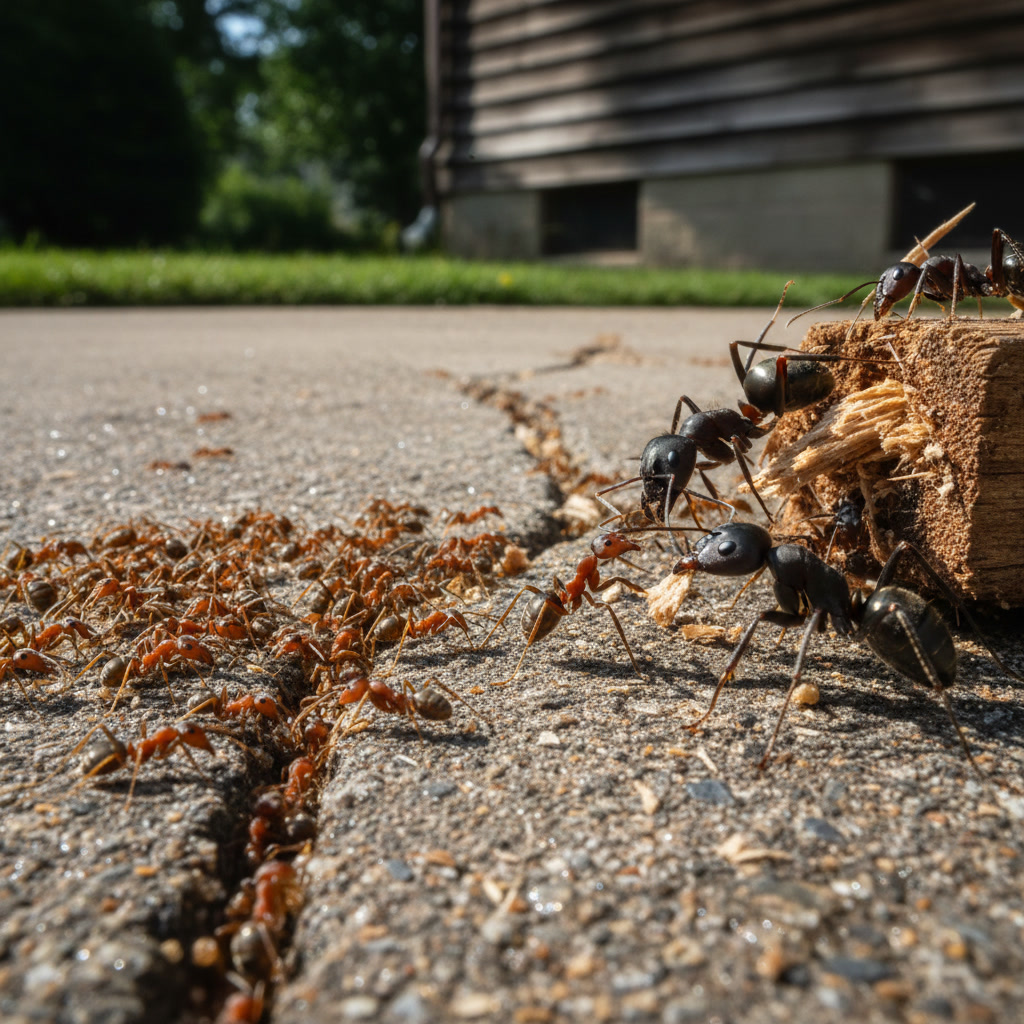
Carpenter ants, the second most common culprit, don’t actually eat wood but excavate it to create nesting galleries. A mature carpenter ant colony can house 3,000 to 10,000 workers. Unlike termites, carpenter ants prefer moist or partially decayed wood, making areas with water damage particularly vulnerable.
Powderpost beetles and old house borers represent less common but equally damaging threats. These beetles lay eggs in wood, and their larvae tunnel through timber for months or years before emerging as adults, leaving behind distinctive exit holes.
Visible Structural Damage and Wood Deterioration
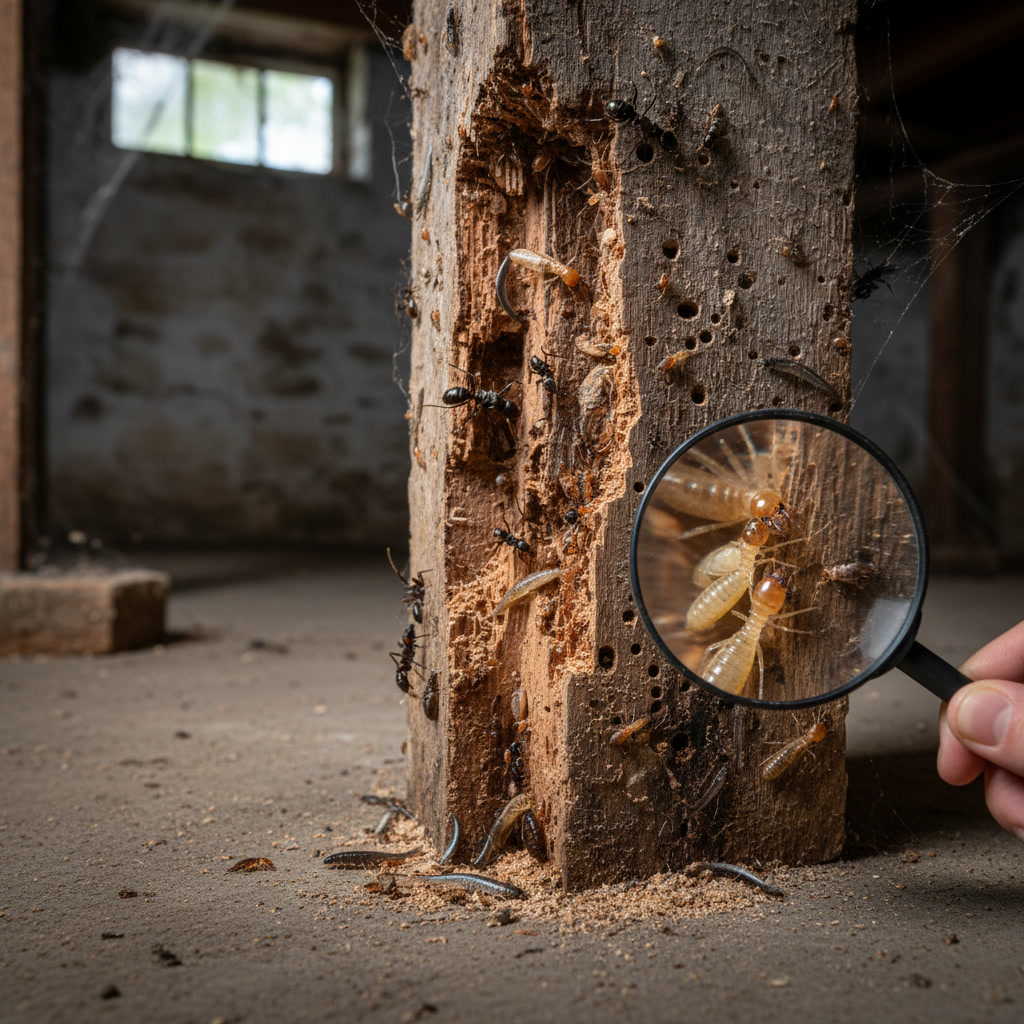
The most obvious signs of wood damaging pests appear in the wood itself. Active infestations create distinctive patterns of damage that trained eyes can recognize immediately.
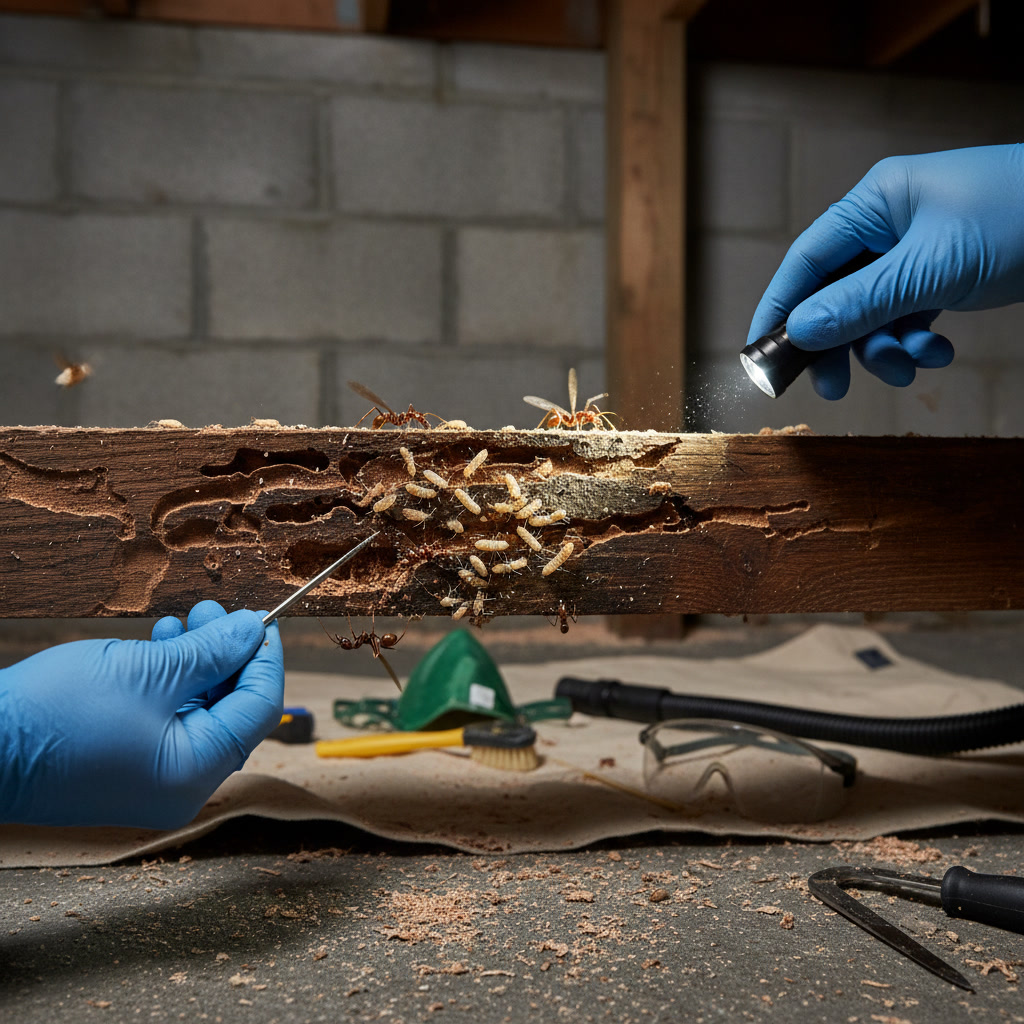
Check exposed wooden beams, joists, and support posts for hollow-sounding areas. Tap suspect wood with a screwdriver handle. If it sounds hollow or the screwdriver pushes through easily, the interior has likely been compromised. Termites eat wood from the inside out, leaving only a thin veneer of surface wood intact.
Sagging floors, ceilings, or door frames often indicate advanced structural damage. When support beams lose their integrity due to pest activity, the structures they support begin to fail. You might notice that doors and windows stick or no longer fit properly in their frames.
Surface-Level Wood Changes
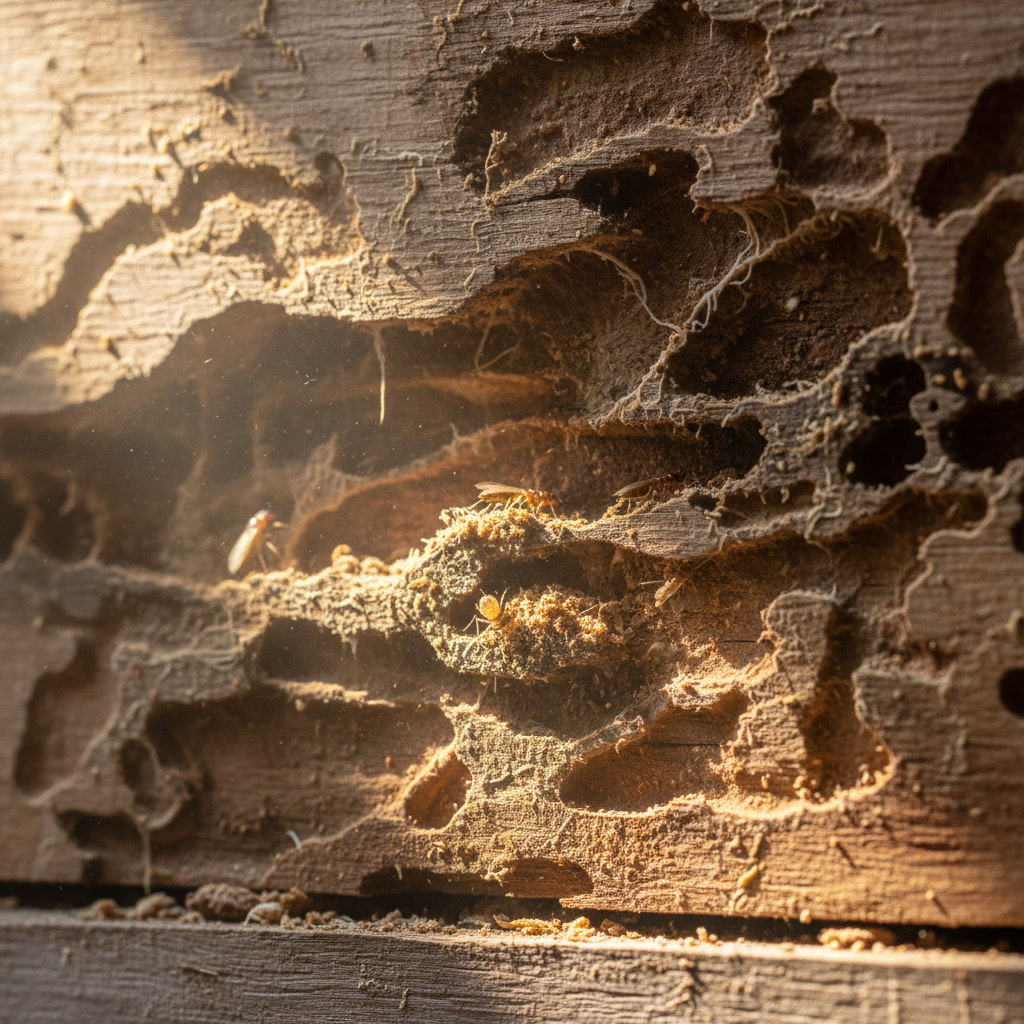
Look for blistering or darkening of wood surfaces, which suggests termites feeding just below. Paint that appears bubbled or uneven often covers damaged wood underneath. Carpenter ants create smooth, sandpaper-like galleries, while termites leave wood looking layered and damaged along the grain.
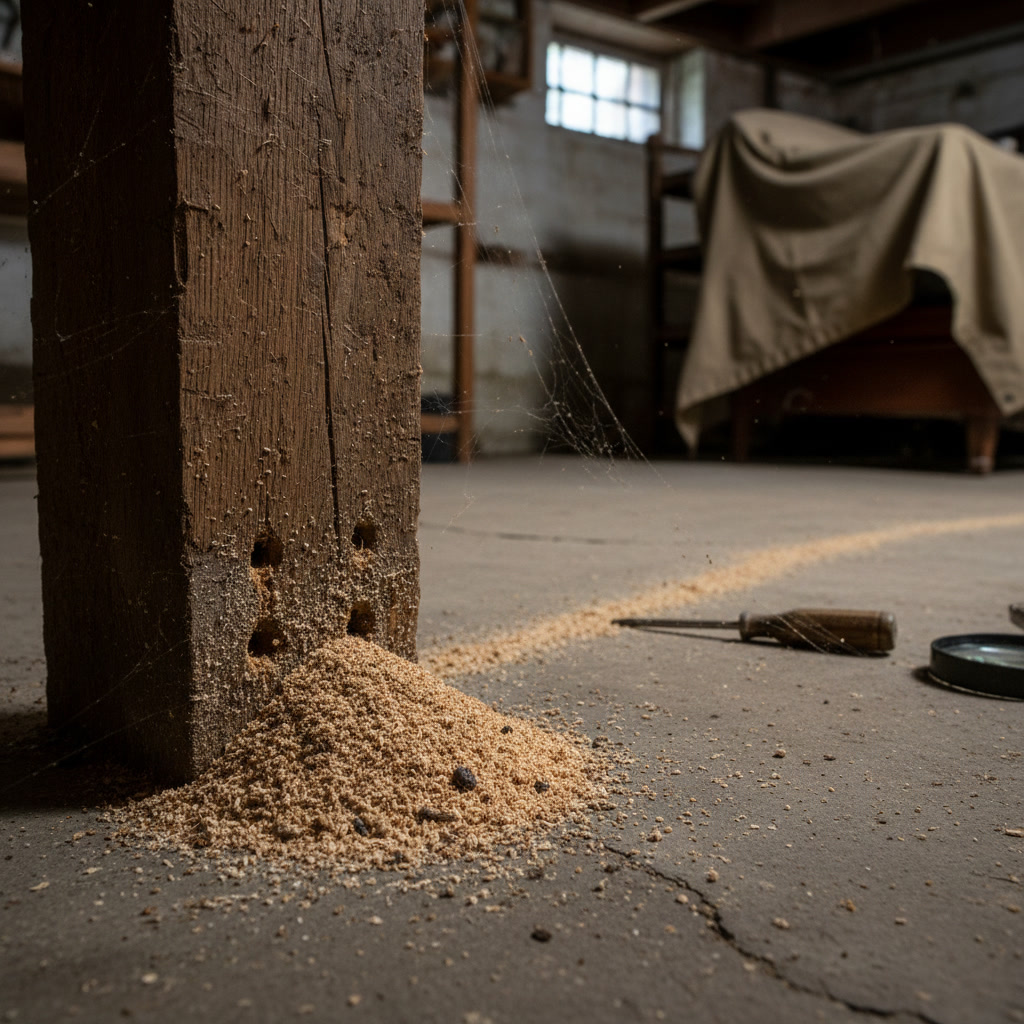
Small pinholes in wood surfaces, typically 1/16 to 1/8 inch in diameter, indicate powderpost beetles. Fresh holes appear clean with sharp edges, and you may find fine, powdery sawdust below them. These exit holes appear when adult beetles emerge from the wood after completing their larval development.
Insect Evidence and Physical Sightings
Direct observation of the pests themselves or their physical evidence provides conclusive proof of infestation. Knowing what to look for and when increases your chances of catching problems early.
Termite swarmers emerge in spring, typically on warm days following rain. These winged reproductive termites are dark brown or black and measure about 3/8 inch long. Finding swarmers inside your home almost always means an established colony is nearby or already inside your structure.
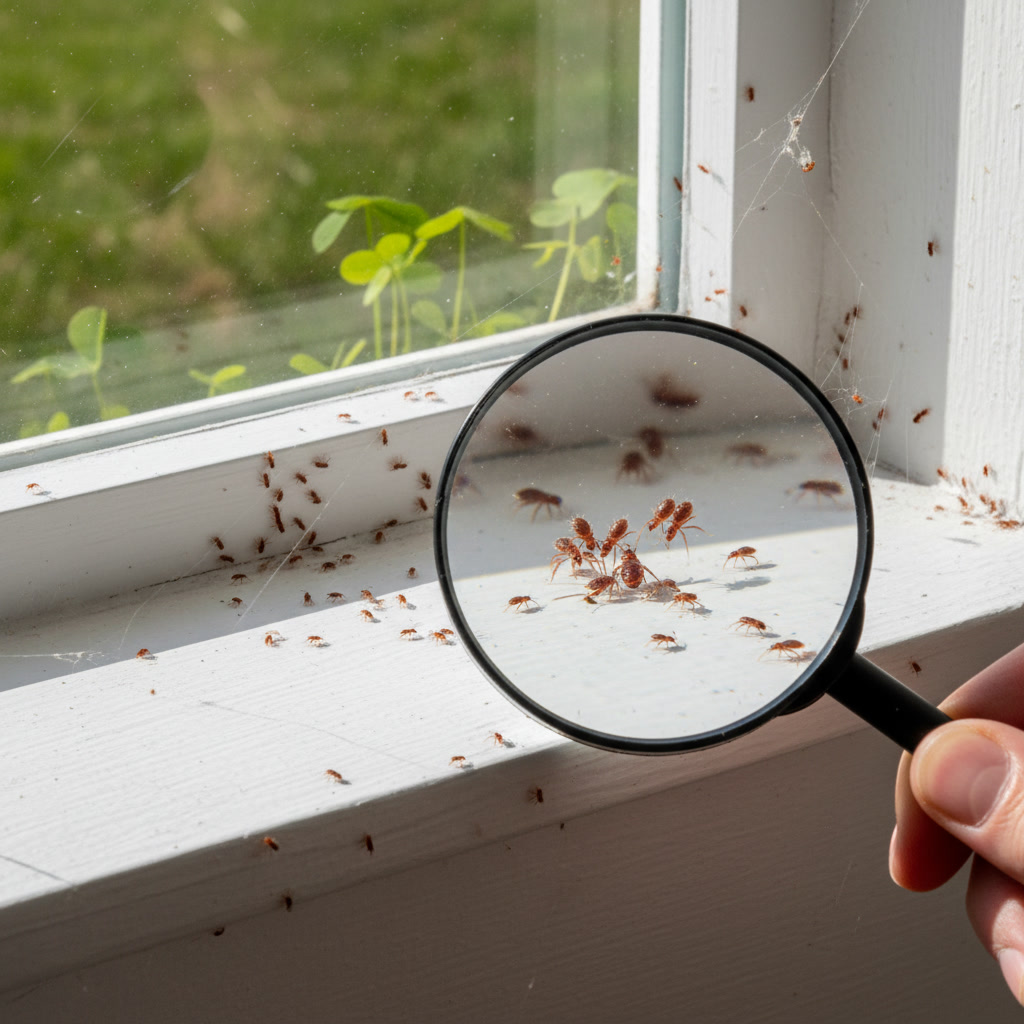
After swarming, termites shed their wings. Look for small piles of discarded wings near windowsills, door frames, or on floors, especially near basement windows. These translucent wings all appear roughly the same size, unlike ant wings which vary in length.
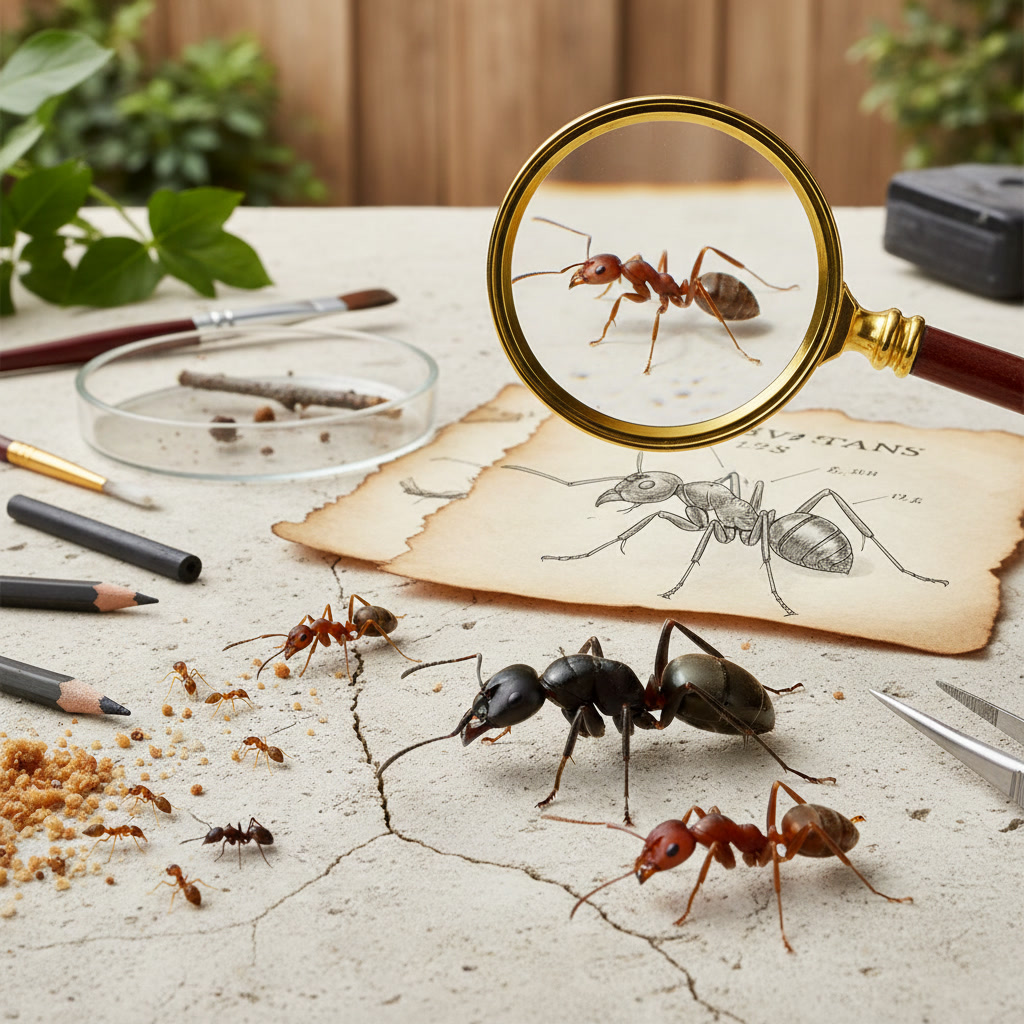
Carpenter ants are large, black ants measuring 1/4 to 1/2 inch long. You’ll most often spot them at night when they forage for food. A few carpenter ants don’t necessarily indicate a nest in your home, but seeing them consistently, especially in spring, suggests an indoor colony. If you find large-bodied ants with wings indoors during late spring or summer, you likely have a mature colony somewhere in your structure.
Frass and Sawdust Accumulation
Wood-destroying pests create waste as they tunnel and feed. This debris, called frass, appears different depending on the pest species and helps with identification.
Carpenter ant frass looks like sawdust mixed with insect body parts. The material feels coarse and may contain fragments of insulation or other materials. You’ll find it below the openings to their galleries, often in small piles on the floor or on surfaces below infested wood.
Termite droppings, produced only by drywood termites (less common in Hollis), resemble tiny pellets or coffee grounds. Subterranean termites, the species most prevalent in our area, don’t leave droppings outside their tunnels but may create mud-like material in their galleries.
Powderpost beetle frass is extremely fine and powdery, almost like flour or talcum powder. Fresh frass indicates active infestation, while old frass may simply represent past problems that no longer require treatment.
Mud Tubes and Shelter Tunnels
Subterranean termites build distinctive mud tubes that serve as protected highways between their underground colonies and your home’s wood. These tubes provide moisture and protection from open air, which would quickly kill exposed termites.
Inspect your foundation walls, especially where concrete meets wood. Mud tubes typically measure 1/4 to 1/2 inch wide and run vertically from the soil to wooden structures. They appear brown or tan and have a rough, dried-mud texture.
Check in crawl spaces, basements, and along basement walls or piers. Tubes often run along the inside of foundation walls or across non-wood surfaces to reach wooden beams and joists. They’re particularly common near areas with poor drainage or moisture problems.
Breaking open an active tube reveals pale, soft-bodied termite workers inside. If you find an empty tube, the termites may have moved to another location or the tube may be old. However, even empty tubes warrant professional inspection since colonies often maintain multiple access points.
Understanding termite treatment costs early can help you budget for necessary interventions before damage becomes extensive.
Moisture Issues and Environmental Conditions
Wood damaging pests thrive in environments with elevated moisture levels. Identifying and addressing moisture problems in your home reduces your risk of infestation and helps detect existing pest activity.
Check for water stains on ceilings, walls, or floors. These discolorations indicate leaks or condensation that creates ideal conditions for carpenter ants and wood decay fungi. Both carpenter ants and termites preferentially attack wood that moisture has already softened.
Inspect your basement and crawl space for standing water, dampness, or musty odors. Poor ventilation in these areas maintains high humidity that attracts wood-destroying insects. Use a moisture meter to check wood moisture content. Readings consistently above 20 percent create prime conditions for pest activity.
Problem Areas to Monitor
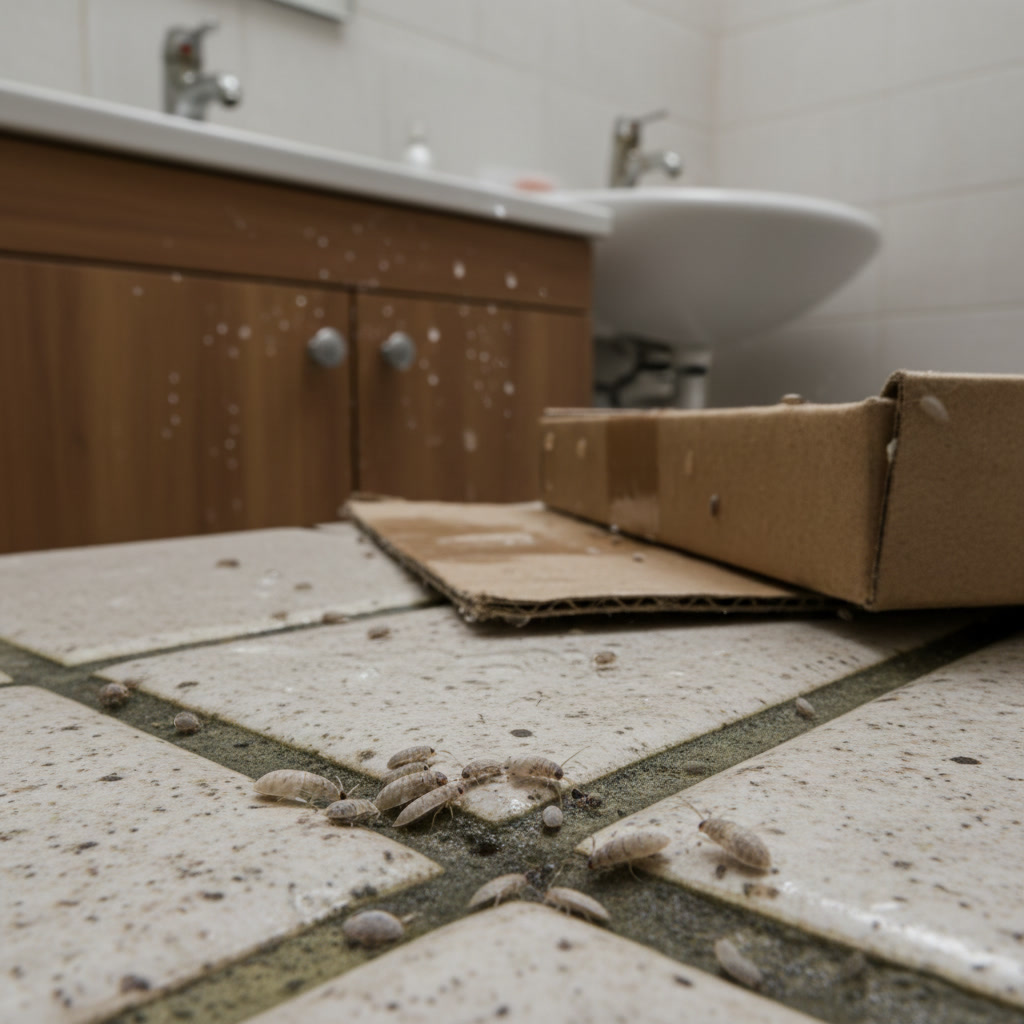
Certain locations in your home face higher risk than others. Bathrooms, kitchens, and laundry rooms generate significant moisture. Check under sinks, around toilets, and near dishwashers for any signs of leaks or water damage to surrounding wood.
Attics with inadequate ventilation trap moisture, especially in winter when warm interior air meets cold roof surfaces. Look for water stains on roof sheathing or rafters, which indicate condensation problems that can attract pests.
Exterior wood-to-ground contact points represent critical vulnerabilities. Wooden deck posts sitting directly on soil, wood siding touching the ground, and firewood stacked against your home all provide easy termite access. Professional pest assessments identify these risk factors before infestations establish.
Sounds From Within Walls and Structures
Large carpenter ant or termite colonies produce audible sounds as thousands of insects work inside your walls. These sounds are subtle but detectable in quiet conditions, particularly at night.
Carpenter ants create a soft rustling or crinkling sound as they move through their galleries. In severe infestations, you might hear them chewing wood, which sounds like faint crackling or crunching. Place your ear against the wall in areas where you suspect activity, especially during evening hours when carpenter ants are most active.
Soldier termites create warning sounds by banging their heads against tunnel walls when the colony is disturbed. This produces a quiet clicking or ticking noise. You’re most likely to hear this after tapping on the wall near an infested area.
Pro Tip: Use a stethoscope or place a glass cup against the wall and put your ear to it. This amplifies internal sounds and helps you detect activity that would otherwise be too quiet to hear.
When to Call Professional Pest Control
Identifying wood damaging pests early dramatically improves treatment outcomes and reduces repair costs. Certain signs demand immediate professional attention from qualified exterminators.
Contact a professional if you observe multiple warning signs simultaneously. Finding both mud tubes and hollow-sounding wood, for example, indicates an active and potentially large termite infestation requiring immediate treatment. Royal Exterminating Co provides comprehensive wood damaging and structural pest services throughout the Hollis area.
Schedule an inspection if you notice any structural changes like sagging floors, sticking doors, or ceiling damage. These symptoms suggest that pest activity has already compromised your home’s integrity. Waiting to address these issues allows further damage and increases repair costs exponentially.
New home purchases or real estate transactions warrant professional pest inspections regardless of visible signs. Many infestations remain hidden behind walls or in crawl spaces that casual observers never examine. Most mortgage lenders require termite inspections before finalizing home purchases.
Professional Inspection Advantages
Trained technicians access specialized tools that detect hidden infestations. Moisture meters, thermal imaging cameras, and acoustic detectors reveal pest activity invisible to the naked eye. These technologies identify problems in walls, ceilings, and floors without destructive investigation.
Professional inspectors know exactly where to look based on pest biology and local infestation patterns. They examine areas homeowners often overlook, including subfloor spaces, roof voids, and the interior of wall cavities through electrical outlets and plumbing penetrations.
Accurate identification determines appropriate treatment methods. Different wood damaging pests require different control strategies. Misidentifying the pest or attempting DIY treatments often wastes money and allows populations to grow while ineffective treatments fail.
Prevention Strategies for Hollis Homeowners
Preventing wood damaging pests is far more cost-effective than treating established infestations. Implementing a few key practices significantly reduces your risk.
Eliminate wood-to-soil contact around your home’s perimeter. Replace wooden foundation components with concrete or composite materials. Maintain at least six inches of clearance between soil and any wooden siding or structural members.
Control moisture aggressively throughout your property. Fix leaky pipes, faucets, and roof damage immediately. Ensure gutters and downspouts direct water at least three feet away from your foundation. Install vapor barriers in crawl spaces and ensure adequate ventilation in attics and basements.
Store firewood at least 20 feet from your home and keep it elevated off the ground. Wood piles provide ideal harborage for termites and carpenter ants, and proximity to your home creates a bridge for pests to migrate indoors.
Remove tree stumps, old lumber, and wood debris from your property. These materials attract termites and support colony growth near your home. Dead trees and large branches should also be removed promptly, as they often harbor wood-boring beetles.
Seal cracks and gaps in your foundation, around utility penetrations, and where different building materials meet. While subterranean termites can build tubes over these barriers, sealing reduces the number of potential entry points and makes detection easier.
Regular professional inspections catch problems before they become severe. Annual termite inspections cost a fraction of major structural repairs and provide peace of mind. Many residential pest control services include periodic inspections as part of ongoing protection plans.
Frequently Asked Questions
How quickly can wood damaging pests destroy a home?
The timeline varies by pest species and colony size. A mature subterranean termite colony of 60,000 workers can consume about one foot of a 2×4 board in six months. Smaller colonies or carpenter ants work more slowly, but significant structural damage typically develops over two to five years of unchecked activity. Early detection and treatment prevent this progression.
Can I treat wood damaging pests myself?
DIY treatments rarely succeed against established wood-destroying pest infestations. Over-the-counter products lack the potency of professional formulations and homeowners often misapply them. Structural pest control requires specialized equipment, extensive training, and proper licensing. Failed DIY attempts delay effective treatment and allow damage to worsen.
How much does professional treatment cost in Hollis?
Treatment costs depend on infestation severity, home size, and pest species. Initial termite control treatments typically range from several hundred to several thousand dollars. Carpenter ant elimination usually costs less than termite treatment. Professional inspection provides accurate estimates based on your specific situation.
Will I need to leave my home during treatment?
Most modern wood damaging pest treatments allow you to remain in your home. Technicians target specific areas where pests are active rather than applying whole-house fumigation. Some treatments use baiting systems that pose no risk to occupants. Your pest control professional will explain any necessary precautions for your specific treatment plan.
How can I tell the difference between termite damage and carpenter ant damage?
Termite galleries appear rough and contain mud-like material or soil particles. The damaged wood looks layered and follows the grain pattern. Carpenter ant galleries are clean and smooth, appearing almost sanded. Carpenter ants often leave frass piles below their entry holes, while subterranean termites rarely leave visible debris outside their tunnels.
Protecting Your Hollis Home From Further Damage
Wood damaging pests cause serious structural problems that worsen rapidly without intervention. Recognizing warning signs like hollow-sounding wood, mud tubes, discarded wings, or strange sounds from walls enables you to address infestations before they compromise your home’s integrity. Moisture control, proper maintenance, and professional inspections form the foundation of effective prevention.
If you’ve noticed any of these warning signs in your home, Royal Exterminating Co provides expert identification and treatment of wood-destroying insects throughout Hollis and surrounding areas including Queens Village, St. Albans, and Cambria Heights. Our licensed technicians use proven methods to eliminate infestations and prevent future problems.
Contact Royal Exterminating Co at +16469962656 to schedule a comprehensive inspection. Early detection saves thousands in repair costs and protects your most valuable investment.