The difference between pavement ants carpenter ants comes down to damage potential. Pavement ants are nuisance pests that nest in cracks and foundation gaps but do not harm structures. Carpenter ants, however, tunnel through wood to create galleries, causing serious structural damage over time. Identifying which species has invaded your property determines whether you face a minor inconvenience or a costly repair situation.
Why Ant Identification Matters for Property Owners
Most homeowners notice ants trailing across kitchen counters or basement floors and assume all ants behave the same way. That assumption can cost thousands in repairs. Different ant species have different nesting habits, food preferences, and damage profiles. Pavement ants might send hundreds of workers foraging for crumbs, but they build nests in soil and concrete cracks. Carpenter ants nest inside the wood itself, hollowing out beams, joists, and framing over months or years.
Misidentifying the species leads to ineffective treatment. Baits formulated for sugar-feeding ants fail against protein-preferring species. Surface sprays kill visible workers but leave hidden colonies untouched. Professional identification through a thorough pest assessment ensures you target the right species with the right methods.
How Homeowners Confuse These Two Species
Both pavement and carpenter ants appear dark brown to black. Both form visible trails along baseboards and outdoor pathways. Both swarm during spring mating flights, creating brief clouds of winged ants near windows. These surface similarities cause confusion, especially when homeowners rely on quick online searches instead of close examination.
The confusion deepens because both species can inhabit the same property simultaneously. You might have pavement ants nesting under your driveway while carpenter ants colonize the moisture-damaged wood in your attic. Without professional inspection, you treat one problem while the other continues unseen.
Physical Characteristics That Separate Pavement Ants From Carpenter Ants
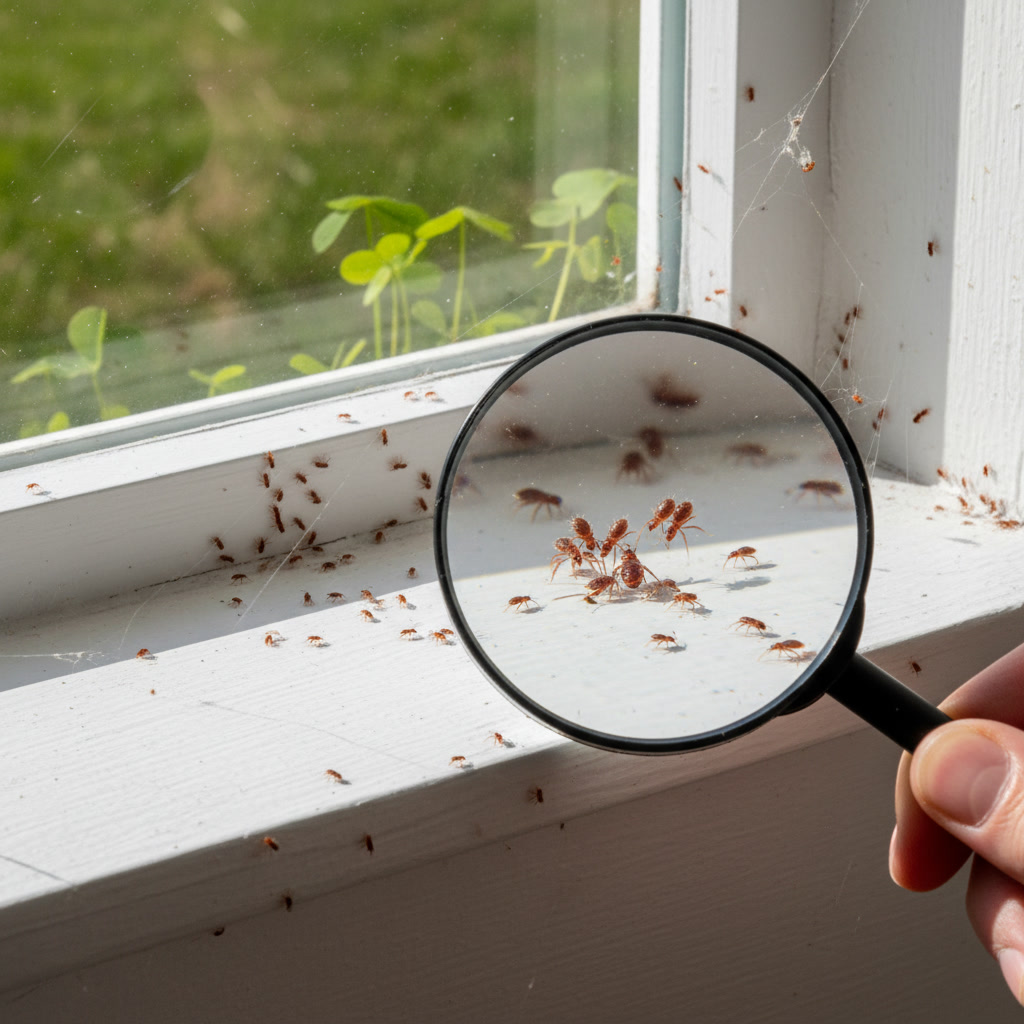
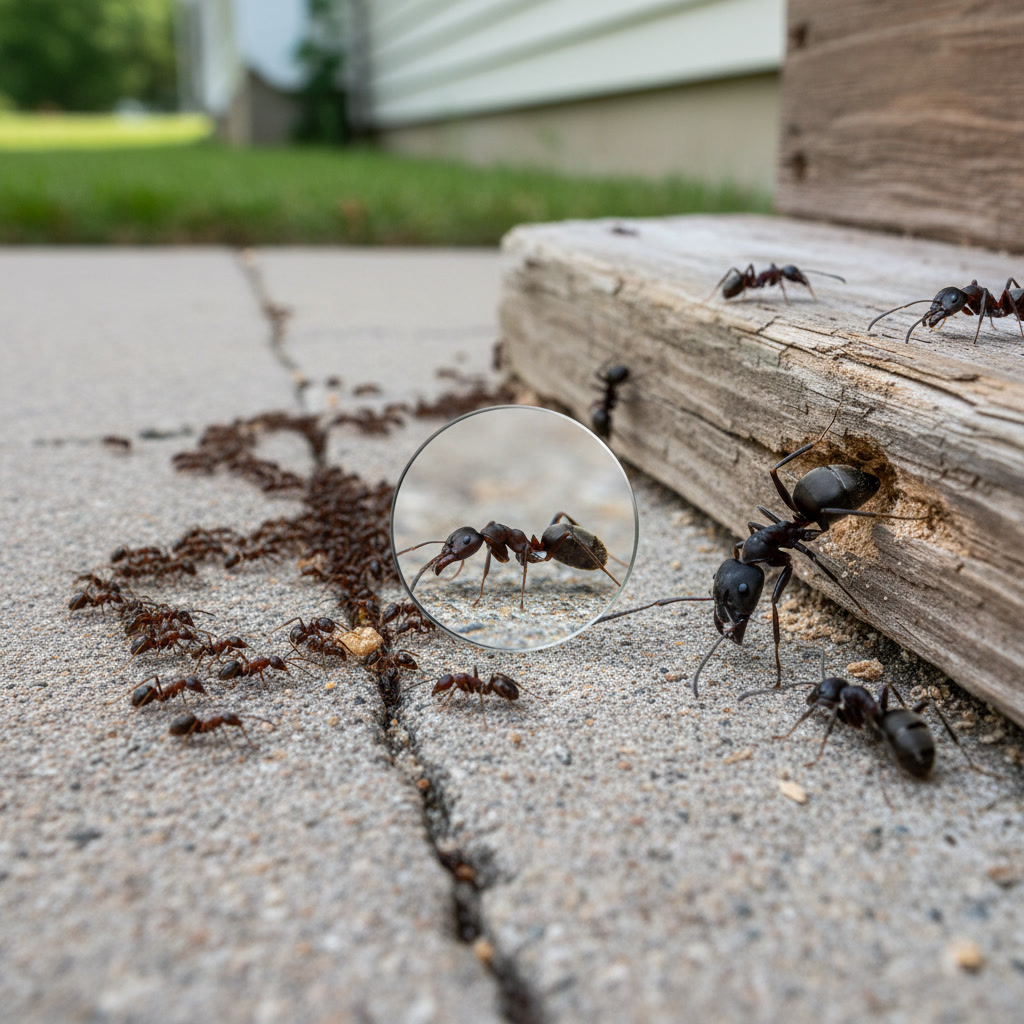
Pavement ants measure 2.5 to 3 millimeters long, roughly the size of a sesame seed. They display dark brown or black coloring with lighter legs. Under magnification, you see parallel furrows on the head and thorax, plus two small spines on the back segment before the waist. The waist has two nodes or bumps between the thorax and abdomen.
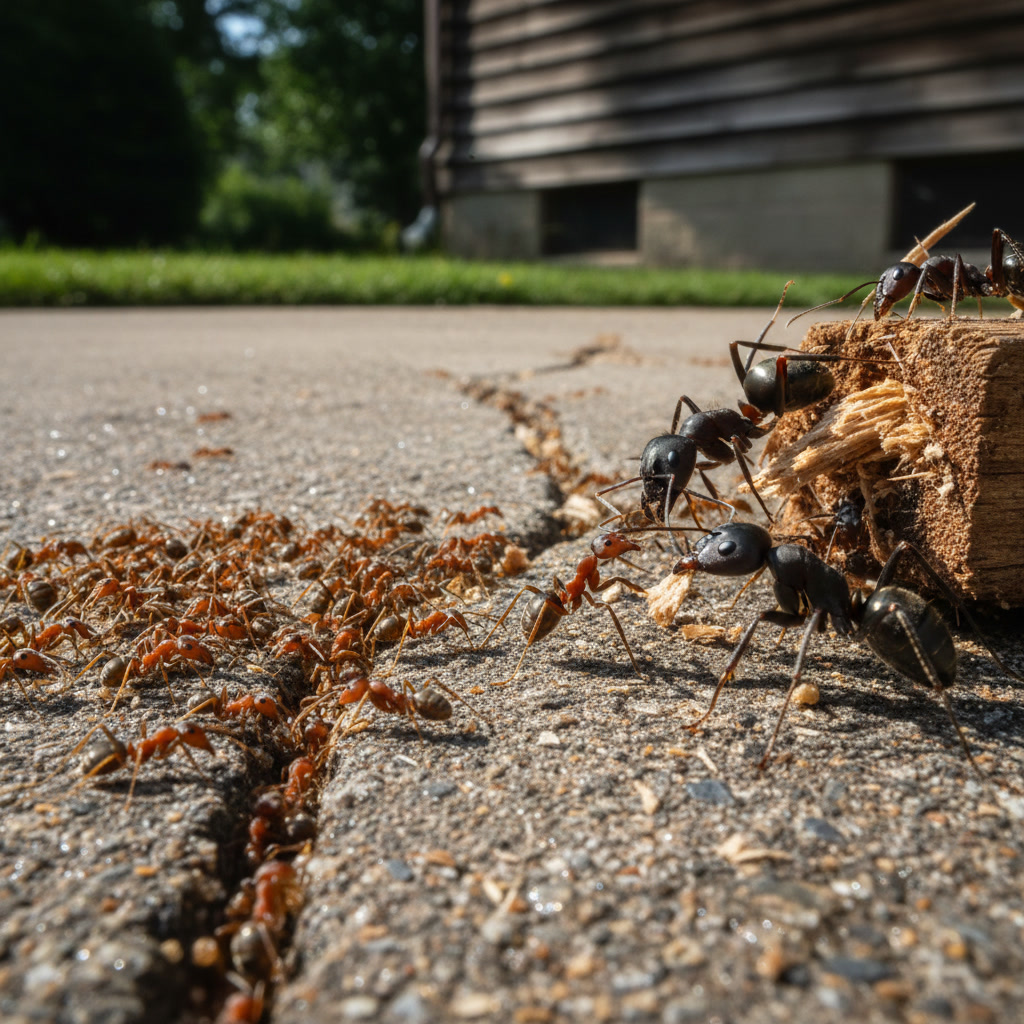
Carpenter ants range from 6 to 13 millimeters, making workers two to four times larger than pavement ants. The largest carpenter ant workers can reach half an inch. Color varies by species, from solid black to red and black combinations. The waist has only one node instead of two. The thorax appears evenly rounded without the humped profile common in other large ants.
Winged reproductive ants provide another identification clue. Carpenter ant swarmers have front wings noticeably longer than hind wings, and the wings appear slightly smoky or tinted. Pavement ant swarmers show less size difference between wing pairs.
Nesting Behavior and Damage Patterns in Queens County Homes
Pavement ants earned their name by nesting under sidewalks, driveways, patios, and foundation slabs. You often spot small mounds of fine sand or soil pushed up through cracks in concrete. Inside homes, they nest in wall voids near heat sources, under flooring, and inside insulation. They do not eat or tunnel through wood. Any structural material simply provides a protective space around their soil-based nest.
Carpenter ants require wood to nest, but contrary to popular belief, they do not eat it. Workers excavate smooth tunnels and galleries to house the colony, ejecting sawdust-like frass through small openings. This frass differs from termite pellets because it contains wood fragments, dead ant parts, and other debris rather than uniform pellets. Favorite nesting sites include water-damaged wood near roofs, windows, doors, and plumbing. One colony of mature carpenter ants can remove several cubic feet of wood over a few years.
In Queens County, both species thrive. The urban landscape provides abundant pavement cracks for one species and aging wooden structures with moisture intrusion points for the other. Royal Exterminating Co encounters both in residential properties throughout the area, often finding pavement ants dominating kitchens while carpenter ants occupy attics or crawl spaces.
What Attracts Each Species to Your Property
Pavement ants forage for protein and sweet foods. They invade kitchens seeking grease, meats, breads, and sugary spills. Outdoors, they feed on honeydew from aphids and collect dead insects. Colonies expand rapidly in spring and summer, sending hundreds of workers on foraging trails that follow structural edges and utility lines.
Carpenter ants prefer protein sources, especially other insects, but also seek out honeydew and sweet liquids. Moisture attracts them more than food. Leaking roofs, condensation around air conditioning lines, clogged gutters, and poor ventilation create the damp wood conditions carpenter ants need for nesting. A property with excellent sanitation can still suffer carpenter ant damage if moisture problems exist.
Step by Step Guide to Identifying Which Ant You Have
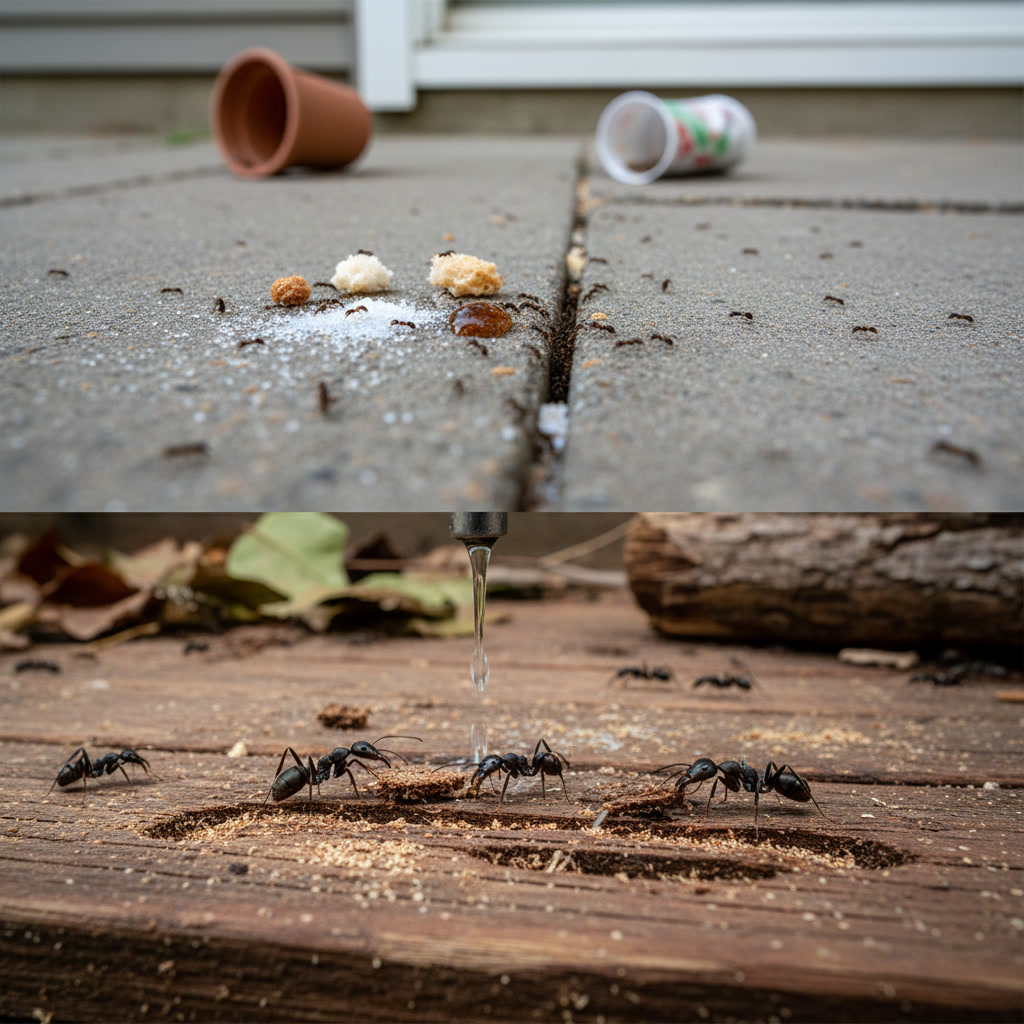
Start by capturing a few worker ants in a sealed plastic bag or small jar. Avoid crushing them. Refrigerate the sample to slow movement for easier examination.
First, measure body length. Ants smaller than a grain of rice point toward pavement ants. Ants approaching or exceeding a quarter inch suggest carpenter ants or other large species.
Second, count the nodes on the waist between thorax and abdomen. Two nodes indicate pavement ants. One node fits carpenter ants.
Third, examine the thorax profile from the side. An evenly rounded thorax without bumps or humps suggests carpenter ants. Visible grooves and texture on the head confirm pavement ants under magnification.
Fourth, look for nesting evidence. Piles of wood shavings and frass near walls, beams, or wooden trim indicate carpenter ants. Small soil mounds emerging from pavement cracks or foundation joints point to pavement ants.
If you find signs that overlap or remain unclear, professional inspection eliminates guesswork. Many homeowners discover they have multiple species after a thorough insect and arthropod evaluation reveals the full scope of activity.
How Each Species Causes Problems Beyond Physical Damage
Pavement ants contaminate food storage areas and create sanitation concerns in kitchens. Their large colonies produce thousands of workers that trail across countertops, inside cabinets, and along walls. While they do not bite humans aggressively, they can carry bacteria from trash and outdoor environments into food preparation zones.
Carpenter ants rarely bite unless directly threatened, but their structural damage creates entry points for moisture, other pests, and energy loss. Weakened beams and joists compromise building integrity. Frass accumulation inside walls signals active galleries that continue expanding. Unlike termites that consume wood for nutrition, carpenter ants work slower but target already compromised wood, accelerating decay in moisture-damaged areas. Understanding the signs of wood damaging pests early prevents minor infestations from becoming major structural issues.
Why DIY Treatments Often Fail for Both Species
Over-the-counter ant baits and sprays kill visible workers but miss the queen and colony core. Pavement ant colonies can contain multiple queens and split into satellite nests when threatened, making eradication difficult without treating all connected nest sites. Carpenter ant colonies often establish parent nests outdoors with satellite nests inside, requiring coordinated treatment of both locations.
Aerosol insecticides create a repellent barrier that scatters foraging ants, spreading the infestation to new areas. Baits require correct formulation and placement to attract the target species. Pavement ants prefer grease-based baits in early season and sweet baits later in summer. Carpenter ants need protein baits placed along travel routes near nest sites, not in open kitchen spaces.
Professional treatment through ant control services combines inspection, species identification, targeted baiting, residual treatments, and follow-up monitoring. Technicians locate nests using experience and sometimes moisture meters to find the damp wood carpenter ants prefer. They apply treatments that transfer through the colony via grooming and feeding behaviors, eliminating queens that produce new workers.

When to Worry About Structural Damage
Any sighting of carpenter ants indoors warrants immediate inspection. A few scouts suggest a nearby nest, either inside your structure or within 100 yards outdoors. Large numbers of workers, especially during winter when most ants remain dormant, indicate an indoor colony actively excavating wood.
Frass piles below wooden beams, window frames, or door jambs confirm active carpenter ant galleries. The sawdust-like material accumulates gradually as workers clean tunnels. Fresh frass appears lighter in color compared to older deposits. Hollow-sounding wood when tapped, visible galleries with smooth walls, and sagging floors or ceilings in affected areas signal advanced damage requiring immediate attention and possible structural repairs.
Pavement ants cause no structural damage but indicate potential entry points that other pests can exploit. Cracks in foundations, gaps around utility penetrations, and deteriorated mortar that allow pavement ant access also admit moisture, termites, and larger pests. Sealing these entry points after eliminating the ant colony improves overall pest resistance.
Prevention Strategies That Work for Both Ant Species
Eliminate moisture sources by repairing leaks, improving ventilation, and directing water away from foundations. Replace water-damaged wood and correct drainage problems around the property perimeter. Both species need water, though carpenter ants depend on it for suitable nesting sites.
Remove food attractants by storing pantry items in sealed containers, cleaning spills immediately, and taking trash out regularly. Trim tree branches and shrubs away from the house to eliminate bridges that ants use to access structures. Pavement ants and carpenter ants both travel along vegetation touching buildings.
Seal cracks in foundations, gaps around pipes and wires, and openings around windows and doors. Apply weatherstripping where needed. While these barriers do not guarantee exclusion, they reduce easy access points and force ants to travel exposed paths where treatments prove more effective.
Schedule annual inspections to catch infestations early. Professional technicians spot warning signs before colonies grow large enough to cause significant problems or require expensive treatments.
Protecting Your Investment Through Professional Identification and Treatment
Differentiating between nuisance ants and wood-destroying ants protects your property value and saves money on unnecessary repairs. Pavement ants create sanitation headaches but pose no structural threat. Carpenter ants compromise building integrity if left untreated. Both require species-specific approaches for successful elimination.
Royal Exterminating Co provides licensed pest management services throughout New York City and surrounding counties. Our technicians identify ant species accurately, locate nest sites, and apply targeted treatments that eliminate colonies while minimizing environmental impact. Whether you face pavement ants trailing through your kitchen or carpenter ants damaging structural wood, professional assessment ensures effective results.
If you notice ant activity in your home or business, contact our team for a comprehensive inspection. Early identification and treatment prevent minor problems from becoming costly repairs. Reach out to Royal Exterminating Co at +16469962656 to schedule your evaluation and protect your property from ant damage.